Flexible hoses are used across many industries to transport liquids, gases and chemicals safely from one point to another. Although factors such as pressure rating, temperature range and hose size are important, one consideration often has the greatest influence on long-term performance: material compatibility.
Choosing a hose made from a material that is suitable for the fluid being transferred helps maintain reliable operation while reducing unnecessary wear. On the other hand, using an incompatible material can shorten the service life of the flexible hose and affect the efficiency of the system.
Understanding material compatibility allows engineers, maintenance teams and equipment designers to select flexible hoses that meet the requirements of their specific applications.
What Material Compatibility Means
Material compatibility refers to how well the hose material performs when it comes into contact with the substance flowing through it.
Different liquids, gases and chemicals react differently with various hose materials. Some materials remain unaffected even after long periods of exposure, while others may gradually lose their mechanical properties when used with unsuitable media.
Selecting a flexible hose material that resists chemical attack helps preserve the hose’s structure and supports reliable operation throughout its intended service life.
For this reason, compatibility is often considered before factors such as hose length or end connections are finalised.
PTFE Is Widely Used for Chemical Resistance
One of the reasons PTFE flexible hoses are commonly selected for industrial applications is their excellent chemical resistance.
PTFE, or polytetrafluoroethylene, is highly resistant to a broad range of chemicals, making it suitable for transferring aggressive fluids that may not be compatible with many conventional hose materials. This characteristic allows PTFE hoses to be used across numerous industries where chemical compatibility is an important requirement.
The material is also non-reactive and does not readily contaminate the product passing through the hose, making it suitable for applications where product purity is important.
Because of these properties, PTFE has become a widely recognised material for demanding fluid transfer applications.
See also: Looking for HGH Therapy Near Me? Why Testing and Medical Supervision Matter
Chemical Compatibility Supports Longer Hose Life
When the hose material is compatible with the fluid it carries, it is better able to maintain its original physical properties over time.
Chemical attack may cause some materials to soften, harden, swell or become brittle after prolonged exposure. These changes can gradually reduce flexibility and affect the overall condition of the hose.
PTFE is designed to resist many of these effects, allowing it to maintain stable performance in challenging chemical environments. Selecting a chemically compatible hose material therefore contributes to a longer operating life while reducing unnecessary component replacement.
Matching the hose material to the application remains one of the most effective ways to support long-term reliability.
Temperature Also Influences Compatibility
Material compatibility involves more than simply identifying the chemical being transferred.
Operating temperature can significantly influence how a hose performs. Some materials that function well at normal temperatures may behave differently when exposed to very high or very low operating conditions.
PTFE flexible hoses are designed to operate across a wide temperature range, making them suitable for applications involving both elevated and low temperatures. This combination of chemical resistance and thermal stability allows the material to perform consistently in demanding industrial environments.
Considering both the process fluid and the operating temperature helps ensure that the selected hose is appropriate for the intended conditions.
Different Hose Designs Suit Different Applications
Material compatibility should be considered alongside the physical design of the hose.
PTFE flexible hoses are commonly available in smooth bore and convoluted constructions. Smooth bore hoses provide a continuous internal surface that supports efficient flow and simplifies cleaning, making them suitable for applications where minimal flow restriction is important.
Convoluted hoses offer increased flexibility, allowing easier installation where tighter bends or more complex routing are required. Selecting the appropriate hose construction helps ensure that both the material and the hose design meet the operational requirements of the application.
Considering these factors together leads to a more effective hose selection process.
Stainless Steel Braiding Provides Mechanical Protection
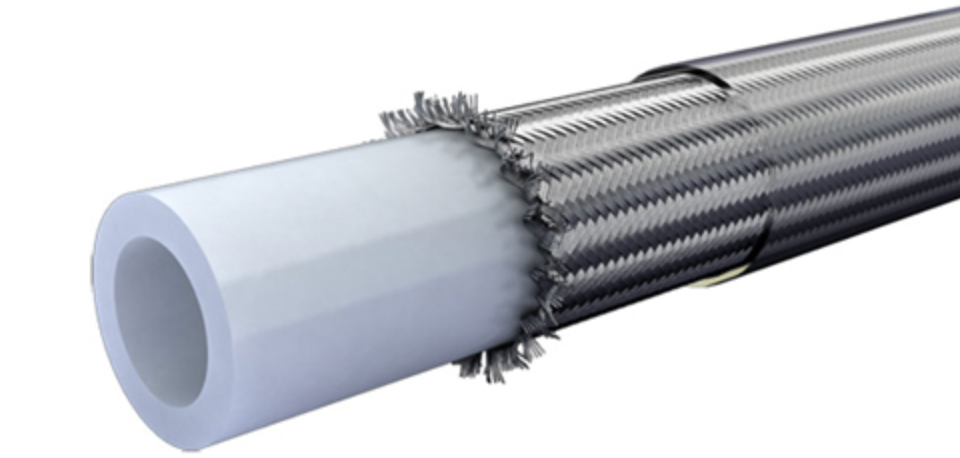
While PTFE forms the inner lining of the hose, many industrial flexible hoses also include an external stainless steel braid.
The stainless steel braid reinforces the hose by improving its ability to withstand pressure while also protecting it from mechanical damage during normal operation. At the same time, the hose retains the flexibility needed for installation in a variety of industrial systems.
This combination allows the chemically resistant PTFE liner to work alongside external reinforcement, creating a hose suitable for demanding operating conditions.
Selecting both the correct internal material and appropriate reinforcement contributes to reliable overall performance.
Product Purity Can Be an Important Consideration
Some industries require the material being transported to remain free from contamination throughout the transfer process.
Because PTFE is chemically inert and has a smooth internal surface, it helps reduce the possibility of product interaction with the hose itself. This characteristic makes PTFE suitable for applications involving chemicals, pharmaceuticals, food processing and other industries where maintaining product integrity is important.
A smooth internal bore also assists with cleaning and reduces the likelihood of material remaining inside the hose after use.
Material compatibility therefore supports not only hose durability but also consistent product quality.
Pressure Ratings Should Be Considered Alongside Material Selection
Although chemical compatibility is essential, it should never be considered in isolation.
Every flexible hose must also be capable of handling the operating pressure of the system. Hose construction, reinforcement and end fittings all influence the pressure rating that the hose can safely accommodate.
Selecting a chemically resistant material while overlooking pressure requirements may result in a hose that is unsuitable for the application. Considering all operating conditions together leads to a more balanced and reliable selection process.
Material compatibility works best when combined with proper engineering evaluation of the complete system.
Correct End Connections Complete the System
The hose itself is only one part of the fluid transfer assembly.
End fittings should also be selected to suit the operating environment and maintain compatibility with both the hose and the system being connected. Properly matched fittings help support secure installation while maintaining the integrity of the complete assembly.
Choosing compatible materials throughout the entire hose assembly helps create a reliable fluid transfer solution capable of operating under demanding industrial conditions.
This integrated approach contributes to consistent performance across the entire system.
Material Selection Supports Many Industrial Applications
PTFE flexible hoses are used across numerous industries because of their combination of chemical resistance, temperature performance and flexibility.
Applications include chemical processing, pharmaceutical manufacturing, food processing, petrochemical operations and other industrial environments where aggressive chemicals or demanding operating conditions are present.
Although every application has unique requirements, the selection process always begins with understanding the properties of the fluid being transferred. Matching those properties with a suitable hose material forms the foundation of reliable hose performance.
Careful evaluation of compatibility helps ensure that the selected hose is appropriate for the intended operating conditions.
Conclusion
Material compatibility is one of the most important considerations when selecting a flexible hose. Choosing a hose material that is suitable for the fluid, operating temperature and overall process conditions helps support reliable performance while extending service life.
PTFE flexible hoses offer excellent chemical resistance, broad temperature capability and compatibility with a wide range of industrial applications. Combined with options such as smooth bore or convoluted construction and stainless steel braiding, they provide solutions for many demanding fluid transfer systems.
By considering material compatibility alongside pressure, hose construction and end connections, engineers and maintenance teams can make informed decisions that support safe, efficient and dependable industrial operations.