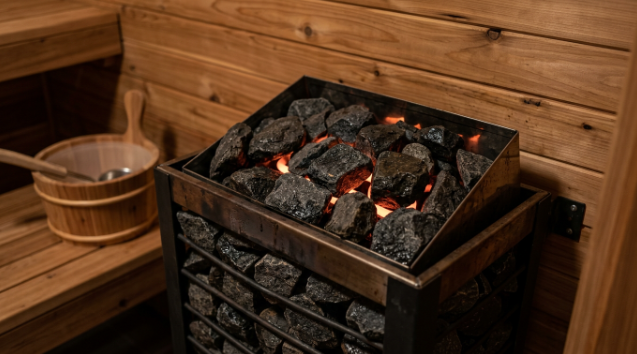
A full-size 6 to 10.5 kW electric sauna heater generally needs a cabin of at least 150 to 200 cubic feet to make sense, and plenty of homes, apartments, and finished basements simply do not have that much room to spare. The realistic options below that threshold are a compact corner or wall-mount heater in the 1.5 to 4.5 kW range, a smaller single-occupant cabin sized specifically around a low-output unit, or in some cases a plug-in unit that avoids new electrical work altogether. None of these is a downgrade in the health-relevant sense, since the research behind sauna’s reported associations is built on temperature and session frequency, not cabin size.
How Small Can a Sauna Heater Realistically Go?
The smallest practical residential heaters run 1.5 to 3 kW and are built for cabins as tight as 60 to 90 cubic feet, roughly a single-person standing or seated space. Below that footprint, the heater usually stops being the limiting factor and door swing or ceiling height for someone standing up becomes the actual constraint. A compact heater still needs the same basic clearances as a larger one relative to its own size, typically 1 to 2 inches from combustible wood, so a manufacturer’s install sheet still needs to be checked even for the smallest unit on the market.
See also: Direct Cremation: What It Is and What It Actually Costs
What Does the Evidence Say About Cabin Size and Benefit?
The Finnish cohort research most often cited for sauna’s reported cardiovascular associations was not measuring cabin volume, it was measuring temperature, frequency, and duration of use across years. A 2018 review in Mayo Clinic Proceedings summarizing this body of research described the associated benefits in terms of session frequency and duration at sauna-range temperatures, generally above 150 degrees, with no mention of a minimum room size. A separate review in The American Journal of Medicine covering benefits and risks reached a similar framing. This matters directly for anyone downsizing: a compact single-person cabin that reaches the same temperature range for a comparable duration fits the pattern described in the research just as well as a larger multi-person room does.
Where Does a Corner-Mount Heater Make Sense?
A corner-mount design tucks the heater into the angle where two walls meet instead of projecting flat off a single wall, typically reclaiming 6 to 12 inches of usable floor or bench space. In a cabin under about 100 cubic feet, that reclaimed space is often the difference between a bench that comfortably seats one person and one that feels cramped. Corner units generally run in the same 3 to 6 kW range as standard wall-mount heaters, so the tradeoff is purely about the footprint, not about output or performance.
When Does a Plug-In Heater Solve the Problem Completely?
For renters, apartments, or anyone who cannot run new wiring, a handful of compact heaters under roughly 1.5 to 1.7 kW are built to plug into a standard 120-volt household outlet on a 15 or 20 amp circuit, avoiding an electrician entirely. The tradeoff is a lower ceiling on both cabin size and maximum temperature, since a plug-in unit simply cannot move as much heat as a hardwired 6 kW model. For a genuinely space-constrained home, that tradeoff is often worth it, since the realistic alternative is no sauna at all rather than a bigger one.
How Should a Buyer Compare Compact Options?
Once cabin size rules out a full-size heater, the comparison points that matter are kilowatt output relative to the actual cubic footage, whether the unit is corner-mount or flat-wall, and whether it needs a dedicated circuit or can plug into an existing outlet. Several current sauna heater lineups, including the compact and full-size models listed at sweatdecks.com, break these specs out side by side, which makes it easier to see which compact model actually fits a specific cabin rather than guessing from a photo. A heater that looks similar to a larger sibling in a product photo can differ substantially in both wattage and mounting style.
Is a Smaller Heater a Long-Term Compromise?
For a single regular user, a compact heater sized correctly to its cabin is not a lesser version of the full-size experience, it is simply matched to a different space. A review in the American Journal of Physiology on the effects of heat and cold on the body found the physiological response tracked temperature and duration rather than room volume, which lines up with the practical experience of compact-cabin owners. The one real limitation is capacity for more than one or two people at a time, which is worth being honest about before buying if hosting guests is part of the plan.
What Cabin Materials Make Sense for a Small Space?
A compact cabin does not need lighter construction than a full-size one, but it does benefit from paying closer attention to insulation quality relative to its smaller air volume. A tight, well-insulated 70 cubic foot cabin holds heat efficiently with a 1.5 to 2 kW heater, while a poorly insulated cabin of the same size can struggle even with a larger unit, since heat loss through thin walls or an uninsulated ceiling matters proportionally more in a small volume. Tongue-and-groove cedar or spruce paneling with no gaps between boards is worth prioritizing over species choice alone in a compact build, since a well-sealed small cabin often outperforms a larger one with sloppier construction.
Door choice matters more in a small cabin too. A full glass door looks appealing but sheds more heat than a solid wood door with a small window, which is a meaningful tradeoff in a space already working with a modest heater output. Buyers converting an existing closet or small room into a compact sauna should also confirm the space can be sealed and insulated properly, since a compact heater cannot compensate for a room that was never built to hold heat in the first place.
Frequently Asked Questions
What is the smallest electric sauna heater made for a home? Compact wall-mount or corner units start around 1.5 to 3 kW for cabins as small as 60 to 90 cubic feet, enough for one person.
Is a smaller sauna heater still associated with health benefits? The research is built on temperature and session frequency, not cabin size, so a compact cabin reaching the same temperature range fits the same studied pattern.
Can a compact sauna heater run on a standard household outlet? Some units under roughly 1.5 to 1.7 kW plug into a standard 120-volt, 15 or 20 amp outlet. Anything larger still needs an electrician.
How much clearance does a corner-mount heater save? Typically 6 to 12 inches of usable floor or bench space compared with a flat wall-mount unit of similar output.
References
- Cardiovascular and Other Health Benefits of Sauna Bathing: A Review of the Evidence, Mayo Clinic Proceedings, 2018
- Clinical Effects of Regular Dry Sauna Bathing: A Systematic Review, Evidence-Based Complementary and Alternative Medicine, 2018
- Does the Combination of Finnish Sauna Bathing and Other Lifestyle Factors Confer Additional Health Benefits? A Review of the Evidence, Mayo Clinic Proceedings, 2023
- Effects of heat and cold on health, with special reference to Finnish sauna bathing, American Journal of Physiology, 2018
By Karen Whitfield