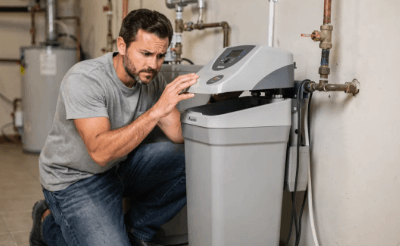
A water softener not using salt is usually a sign that your water softener system is not completing its regeneration cycle. The unit may still have power and the brine tank may still look full, but if salt is not dissolving and moving through the system, the softener may not be recharging the resin beads that remove the hard water minerals from your water.
How Does a Water Softener Work?
A traditional water softener uses what’s called an ion exchange. Hard water enters the system and passes through resin beads inside the tank, which have a negative charge. This attracts the positive charge in the calcium and magnesium that’s dissolved in the water. Softened water then flows out to your sinks, showers, and fixtures.
That’s the first part of how does a water softener work. In the second part, the minerals that have been removed stay attached to the beads until a regeneration cycle takes place, using the brine from the salt to clear the calcium and magnesium from the beads and flush them out of the system.
If the water softener is not using salt, that regeneration process may not be happening correctly.
Salt Is Essential to a Working Water Softener.
A working water softener should use salt gradually. How much it uses will depend on how often your tank regenerates and how much water you use. If the salt level does not change for weeks or months, the system may not be creating brine or pulling brine through the unit. Without brine, the resin beads cannot recharge properly. Once that happens, hard water can move through the home even though the softener appears to be operating.
Common Reasons A Water Softener Is Not Using Salt
We have very hard water in Mesa and throughout the Phoenix area and you may notice a difference in the water. There are a few common reasons why this condition occurs.
Salt Bridge
A salt bridge happens when salt hardens into a crust above the water in the brine tank. From the top, the tank may look full. Under that crust, there may be an empty space preventing the salt from touching the water. It then won’t dissolve, so your system can’t create the brine needed to regenerate.
Salt Mushing
Salt mushing happens when salt breaks down into a thick sludge at the bottom of the brine tank. Instead of dissolving cleanly, the salt can block water movement and interfere with the brine’s movement. Even if there is plenty of salt in the tank, it may not work properly.
Incorrect Settings
If the regeneration schedule is wrong, the softener may not cycle often enough for the amount of water you use. This can happen sometimes after a power outage or if the unit wasn’t set properly to begin with.
Control Valve or Timer Problem
If the timer, meter, or control valve are failing, it can also prevent the system from moving through the regeneration cycle.
Malfunctioning Float Valve
If the float valve in your water softener gets stuck, the system won’t keep the right amount of water in the tank.
Clogged Brine Line or Injector
The brine line, injector, and venturi help move brine through the system during regeneration. If one of these parts becomes clogged with sediment, debris, or salt residue, the softener may not be able to draw brine from the tank. When that happens, salt use may slow down or stop altogether.
Bypass Mode
Water softeners have a bypass mode that allows you to temporarily stop water from flowing through your system. It’s typically used during servicing or cleaning the brine tank. It’s also there in case a crack shows up and water starts leaking from the tank. If the bypass valve is open, water skips the treatment system entirely, meaning your home receives hard water and your water softener is not using any salt.
See also: How Dehumidified Air Services Improve Indoor Comfort and Air Quality
What You Should Check
There are a couple of things to check first:
- Check that the power to the unit is on.
- Make sure the unit is not in bypass mode.
- Watch the salt levels and see if they are dropping over time.
- Check whether the top layer is hard or crusted over.
If the system shows error codes, leaks, standing water in the brine tank, or makes unusual noises, it’s time to call a plumber to check things out.
If your Mesa water softener is not using salt or is not working properly, call George Brazil Plumbing & Electrical for professional water softener inspection and repair. The highly-trained technicians at George Brazil will diagnose the problem and provide you with upfront pricing to fix your problem fast.