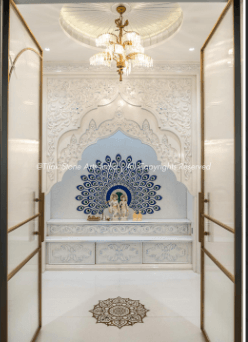
A calm prayer space should settle your day the moment you stand before it. That is the whole point of that space. Yet many home temples end up crowded with idols, framed photos, loose wires, and small brass items that pile up over the years. A simple marble mandir design solves this by stripping the space back to what matters. Clean stone. Good light. Room to breathe.
The attraction of a simple marble mandir design goes beyond looks. It shapes how the space feels during prayer time. White Vietnam marble suits this approach. The grain runs fine and even, the surface takes a soft polish, and the pale tone reflects light without glare. You get a quiet backdrop instead of a busy one.
Why Simple Beats Ornate For Most Homes
Heavily carved mandirs look striking in a showroom. In a real home, they can swallow a small room. The detail traps dust. The shadows sit heavy. And your eye finds nowhere to rest.
A pared-back design works the other way. Smooth marble, a single arch or dome, maybe one carved border along the top. The shrine still feels sacred. It just feels calmer too. Perhaps that calm is the real reason people keep returning to these designs.
Think about your daily routine as well. A plain surface wipes clean in seconds. Deep carvings need a brush and patience. For a space you use every morning, that gap adds up fast.
Getting The Vastu Right Without Overthinking It
Vastu guidance for a mandir is gentler than most people expect. A handful of placement choices carry most of the weight. Let’s break it down.
- Place the mandir in the northeast corner of the home, the Ishan corner that tradition reserves for prayer.
- Set it so you face east or north while you pray.
- Keep it off any wall shared with a bathroom or toilet.
- Avoid putting it inside a bedroom or under a staircase.
- Raise the idols on a small platform rather than resting them on the floor.
None of this calls for a consultant in a basic home. A tape measure and a compass app will do. If your floor plan makes the northeast awkward, the east wall stands as a fair second choice. I think people overthink this part more than any other.
Keep The Clutter Out By Design
Clutter rarely arrives all at once. It creeps in. One extra idol here, a string of fairy lights there, a stack of prayer books on the shelf below. Six months later, the space feels heavy again.
Good design holds the line against that drift. Here is how:
- Pick one main idol or a tight grouping, not a crowd.
- Hide wires through a back channel or behind the panel.
- Choose a closed lower cabinet for storage over open shelves.
- Limit decoration to one or two pieces you actually use.
The discipline matters more than the marble itself. A beautiful temple buried under clutter loses the very thing you wanted from it.
Choosing The Right White Marble
Not all white marble behaves the same way. Some yellows over time. Some stains the first time oil drips from a diya. You want a stone that stays bright for years, not months.
White Vietnam marble holds up well here. It carries a clean, bright white with a fine grain, and it resists the dullness that cheaper stones show after a season or two. You will also see it sold as Swiss white marble, super fine white Vietnam marble, or plain Vietnam marble. Same stone, different labels.
A quick word of caution. Marble is porous. Seal it once after installation, then reseal it every couple of years. Wipe spills early, and skip acidic cleaners like lemon or vinegar. They etch the surface and leave dull patches you cannot polish out easily.
Lighting And Scale For Small Spaces
Light changes how marble reads. Warm light turns white stone soft and faintly golden. Cool light keeps it crisp and modern. For a mandir, warm and low tends to feel right, though that comes down to taste.
Keep the fixtures small. A thin LED strip tucked above the arch does more than a row of bright spotlights ever will. The marble carries the glow on its own.
Scale deserves the same care. A wall-mounted unit or a corner shrine saves floor space in an apartment. A freestanding temple suits a dedicated pooja room. Measure your wall before you fall for a design online. That photo never shows the real size, and a piece that looks neat on screen can dominate a small flat.
What This Means For Your Home
A peaceful prayer space sits within reach for almost any home. No large budget needed. No spare room either. You need restraint, sound stone, and a sensible spot to set it.
Start with placement. Settle the material next. Then fight the urge to fill every inch. That empty space around the shrine is part of the design, not a gap waiting to be filled. The quiet is what you came for.