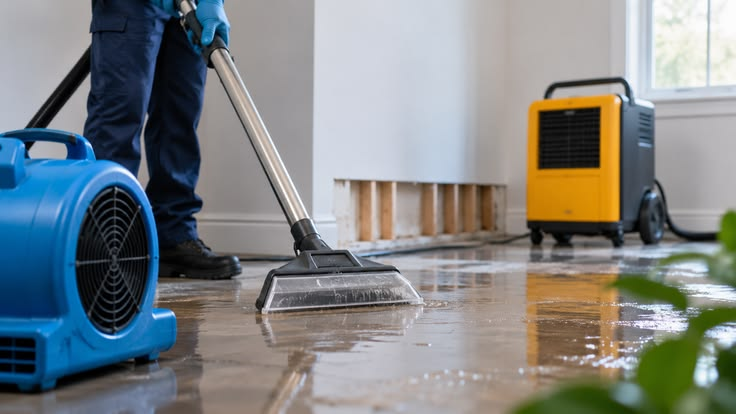
Whilst a leak is usually responded to by mopping up the water, different types of water can present differing degrees of risk. Not recognizing this can in turn lead to potentially serious health issues for you and your family. It can also cause extensive damage to a property.
If you require emergency water damage restoration in Boulder then it is important to respond to situations as swiftly as possible. Our qualified staff at Restoration Logistics Boulder analyze the polluting nature of water so that you can both safeguard and effectively restore your property.
The IICRC Water Pollution Scale
Qualified water damage restorationists adhere to guidelines provided by the Institute of Inspection Cleaning and Restoration Certification. They identify what the water has been in contact with and analyse the extent to which it includes biological and/or chemical pollution.
Depending on the degree of pollution, staff will utilize differing safety gear and decide whether or not absorbent materials such as carpet underlay and plasterboard can be saved or should be disposed of instantly.
It is vital for property owners to fully understand the differences between the water pollution classifications so they recognise why expert assistance is necessary even for what seems to be a small leak. Although water from a tap may seem perfectly safe, it can rapidly permeate floorboards, cavity walls and insulation.
See also: Straps for Handbags: Styles, Materials and How to Choose
Category 1: Clean Water
Water from a clean source falls into this category and does not present an acute health risk to people via touch, consumption and/or breathing. As it does not initially contain dangerous biological, chemical and organic material, there is the greatest potential that floor coverings, worktops and a property’s framework can be rescued, if appropriate drying procedures (including structural drying) can be enacted swiftly.
Typical Causes of Category 1 Water Damage
Generally, this form of water is produced when a property’s water feed is faulty or when rainwater comes into contact with surfaces prior to being contaminated. Typical causes in domestic properties include: burst copper or PEX piping; a faulty water heater; a bathtub or sink that overflows; and defective refrigerators.
Likewise, snow and rainwater that seeps into a property through a hole in its roof initially fits into category one. However, as soon as this water has passed through filthy insulation or attic detritus, it is no longer category one.
Managing and Recovering from Category 1 Water Damage
As category one water is not polluted, property owners can confidently turn off a property’s primary water supply. They can also relocate prized possessions from the affected area. Qualified staff can frequently carry out on-site restoration of carpets, mats and wooden flooring if powerful fans and commercial desiccants are utilised swiftly.
Water damage restoration in Boulder guarantees that clean water can be successfully removed from a property’s structure so that timber framework is not distorted and/or that no opportunity exists for microbes to proliferate.
Category 2: Gray Water
Usually known as grey water, this type of water is substantially polluted, either chemically, physically and/or biologically. People can feel unwell and may even suffer from dermatitis. Should category two water be consumed or touched without suitable safety measures, it can even induce sickness. The water contains biological life, along with substances which encourage bacterial development.
Common Household Sources of Gray Water
Grease, food and other organic substances are commonly treated prior to grey water formation. Typical sources include washing machine and dishwasher discharges, toilet bowl overflow, broken sump pumps and burst waterbeds and fish tanks. Even rainwater that runs along a garage or driveway can become classed as grey water on contact with oil, fertilizer and road dirt.
Health Issues and Solutions
Unlike grey water, which needs to be contained and then disinfected; ‘dry-off only’ is not an appropriate solution. Technicians utilise specialist gloves, footwear and masks to manually remove water and discard affected absorbent substances.
Almost without exception, standard carpet underlay also needs to be discarded having been contaminated with grey water as the soap and microbes are not able to be completely removed by washing. Underfloor and stud work should be deep-cleaned with industrial strength disinfectant and then completely dried prior to re-building.
Class 3: Black Water
Black water is amongst the most unhygienic and is laden with microbiological, chemical and biological contaminants. Significant health concerns exist when exposed to black water.
These include serious cases of food poisoning, hepatitis and tetanus together with a variety of lung related ailments. Specialist biohazard decontamination is necessary for all affected building matter in order to restore a property to liveable condition.
Sources of Black Water
Whilst blocked public sewerage systems and toilets overflowing with faeces are the most readily identifiable causes of black water, natural events can also produce this type of water.
Flood waters that result from swollen streams, rivers or storm waves collect various pollutants such as insect excreta, agricultural and manufacturing chemicals, along with organic decay matter and draw them into a property. Similarly, still, uncontaminated water that has been allowed to sit undisturbed within a house will progressively become black water as free-running bacteria levels soar.
Strict Demolition and Sanitization
It is highly unsafe for individuals to attempt self-decontamination of black water and almost inevitably some hidden microbes will survive the process. Qualified personnel for water damage restoration in Boulder create negative air pressure enclosures incorporating HEPA air purifiers to ensure that spores are not disseminated from afflicted areas to sound ones.
All porous objects which have come into contact with black water, such as plasterboard, insulation, carpet, fabric and skirting boards, need to be manually removed and then disposed of as biohazardous material. Afterwards, these items are heavily disinfected and then sealed.
Conclusion
Water damage can swiftly intensify and shift from an initially relatively benign, clear water leak to either a class 2 or even a class 3 problem. Understanding the different classes of water pollution enables you to appropriately and securely manage such situations. Swift water removal and scientific drying are fundamental when unexpected leaks occur as this avoids both mold and structural damage being caused.