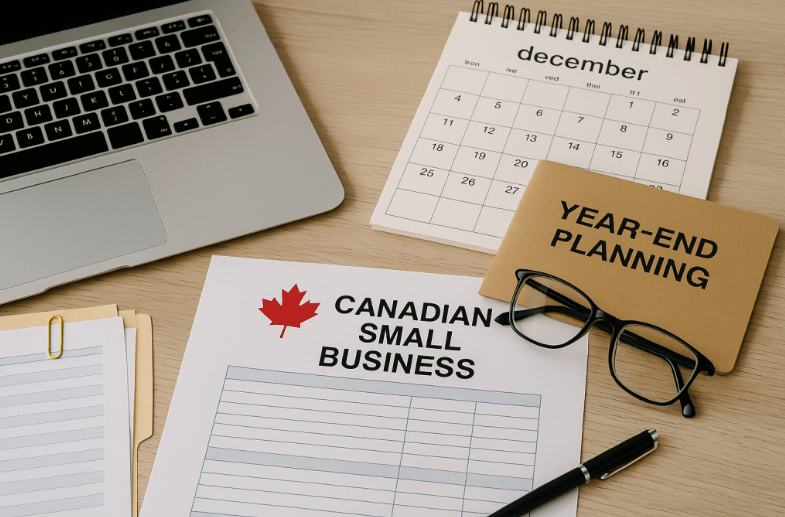
Starting and running a small business in Canada comes with a whole set of tax obligations that can feel overwhelming at first, especially if you are used to simply receiving a paycheque with taxes already taken off. Once you are running your own business, the responsibility for understanding and meeting these obligations shifts onto your shoulders. This guide walks through the basics every small business owner in Canada should understand, from registration through to filing.
Getting comfortable with these rules early makes a huge difference, and many new business owners find it helpful to work alongside a business accountant in Toronto during their first year or two, since setting up good habits from the start prevents a lot of headaches once the business grows and the numbers get more complex.
Choose the Right Business Structure
Most entrepreneurs starting a new business have to decide early on whether they will run as sole proprietors or as a corporation. It’s easier to set up a sole proprietorship and your earnings are taxed on your individual return. This can work if you’re a small operation.
Creating a corporation is in effect creating a new legal entity.
It will have its own accounting and tax filings, taxed from a potentially lower rate on up to a certain limit, and have liability shield. However it also creates more accounting requirements on an ongoing basis. Neither decision is inherently correct, the choice is based on one’s income, lines of business and plans.
Register for GST/HST
You are required to register for a GST or HST number when your business accumulates more than thirty thousand dollars in the course of four consecutive calendar quarters for sales but many businesses find it advantageous to register before this time as it enables them to recover the sales tax paid on business purchases. You will be required to charge, collect and remit this tax to the government on the collected revenue period.
Keep Accurate Financial Records
The simple act of recording income and expenses on a monthly basis is the base on which everything else will function. This doesn’t have to be complicated; for a small operation, it certainly doesn’t have to be. But it must be planned and simple and applied consistently, every sale and expense and dollar spent kept somewhere, either on dedicated accounting software or on some part of a spreadsheet. But if a CPA or accountant asks us to come up with a year’s worth of financials for a CPA or accountant in February, we’ll be a little lost, with long hours of work and the risk of overlooking some deductions.
Understand Tax Instalment Payments
Instalments are something a business owner should be familiar with before they begin their enterprise. If you owe a certain amount of tax two years consecutively, the Canada Revenue Agency usually has you start paying tax by instalments for the subsequent year rather than in one payment with your filing. Failing to meet your instalment schedules could lead to the accrual of interest, making it beneficial to know when instalments are necessary and plan accordingly.
Claim Eligible Business Expenses
Deductible expenses can be as varied as rent, utilities, supplies, advertising, professional services, part of your home office expenses if you work at home, vehicle costs for business use, and so forth. The broad principle is that a business expense should be reasonable and occurr in the process of earning income, but the details will differ substantially based on your field of practice, which is why keeping receipts and clarifying questions when its not clear can be a benefit.
Manage Payroll Responsibilities
When you have employees, payroll can be one more time drain, as you’ll need to calculate and send out source deductions for income tax, Canada Pension Plan, and EI, and these have deadlines that must be met and can cost you penalties that can pile up fast. A good payroll system-using software or hiring a service-is money well spent once you’ve got employees.
Know Your Tax Filing Deadlines
Filing deadlines vary according to the type of business. Sole proprietors usually file by June 15, although any net balance owing is still due by the end of April, while corporations have six months after their year end. To file but balances are generally due within 2 or 3 months – depending on the type of corporation!
The later the deadline is missed the more obvious the penalty and interest.
Remember to be disciplined and note these very important dates on an everyday calendar well in advance.
Keep Records for CRA Requirements
It also pays to be aware of record retention rules, as the CRA generally requires businesses to retain supporting documents (such as invoices, receipts, bank statements and anything else supporting the data on a return) for six years. Rather than accumulating a shoebox of paper receipts, sorting them into a well-structured folder hierarchy is a massive time-saver should you be asked to produce supporting documentation.
See also: Best Deals on Business Class Flights to India: Save More on Luxury Travel
Work with a Trusted Tax Professional
Lastly, never underestimate the importance of maintaining an ongoing rapport with a knowledgeable accountant who is familiar with your operation. Laws and regulations are revised on a pretty regular basis, and one can’t automatically assume that the tax strategy from one year will hold up for the next. Consult with a knowledgeable partner periodically, and not every twelve months at about the time you need to be submitting paperwork, and that professional will keep you on the winning side of the numbers.
Final Thoughts
Running a small business successfully means treating the tax and bookkeeping side of things as a regular part of operations, not an afterthought squeezed in once a year. Understanding your structure, registering for the right accounts, keeping clean records, planning for instalments, and meeting your deadlines all work together to keep your business in good standing and your tax bill as low as it legitimately can be.